
New Technology for Medicine
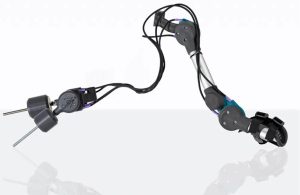
Sinterit, the pioneer of desktop SLS (Selective Laser Sintering) 3D printing, collaborated with 3D designer Bartłomiej Gaczorek to create a groundbreaking solution for children with Spinal Muscular Atrophy (SMA) — a fully functional 3D printed exoskeleton arm that restores the joy of movement, creativity, and independence.
Background: A Mission Rooted in Compassion
SMA is a rare genetic neuromuscular disorder that severely limits a child’s ability to move their limbs. For children with SMA, even basic actions like drawing, playing, or feeding themselves can be impossible without external support.
The idea for the exoskeleton project began with a heartfelt call from a mother looking for help for her 3-year-old son. She had tried previous 3D-printed solutions — none of which met her child’s needs. Her request sparked the beginning of a purposeful collaboration involving designers, engineers, parents, doctors, and physiotherapists — all united by a shared goal: to give children the power to move.
The Challenge
Existing assistive exoskeleton devices were either too expensive, too complex, or insufficiently tailored for young children. Traditional manufacturing methods limited freedom of design, delaying progress and increasing costs.
To succeed, the project required:
- Lightweight but durable parts
- Complex, patient-specific geometries
- Rapid iteration and testing
- Biocompatible, non-toxic materials
- A user-first approach centered on comfort and usability
The SLS Solution with Sinterit Lisa
SLS technology offered the perfect platform to overcome these challenges.
Why SLS 3D printing?
- No need for support structures — ideal for intricate internal geometries
- High precision and material strength
- Freedom of form for custom-fit components
- Short lead times from concept to prototype
“SLS technology gave us capabilities that FDM or SLA simply couldn’t. The strength, detail, and weight made all the difference — especially when working with children’s needs in mind.”
— Bartłomiej Gaczorek, Designer (Cristal Cave)
The Sinterit Lisa desktop SLS printer was selected for its affordability, compact footprint, and industrial-grade output. Thanks to its intuitive software and automated powder handling (with a built-in sieve and easy powder recycling), Lisa helped turn vision into reality quickly and effectively.
Workflow Breakdown
User-Centered Design
The concept was co-developed with parents and physiotherapists, ensuring the design addressed real-world needs and comfort.Functional Prototyping
Using Autodesk Fusion 360, the team optimized mechanical movement and tested ergonomics.High-Precision Printing
All parts were printed with Sinterit’s durable, lightweight SLS powders, engineered for use in medical-grade environments.Testing & Iteration
The exoskeleton was tested directly with children to gather feedback and refine the design — shortening the development cycle to weeks instead of months.
Impact: Movement, Comfort, and Joy
Restored Mobility — The arm helps children lift and move their hands, enabling drawing, play, and personal expression.
Improved Comfort — Lightweight and tailor-made, the arm feels natural to wear.
Rapid Access — The system can be delivered “out of the box” without complex calibration.
Scalable Impact — Initial units were produced for 3 children in Poland, with plans to expand the solution to others worldwide.
“This is not just a device. It’s a way for kids to feel free, capable, and independent.”
— Parent of a child using the exoskeleton
SLS 3D Printing Makes Life Better
The success of the exoskeleton project is just the beginning. There are countless opportunities in medicine—from orthotics to rehabilitation aids—where Sinterit’s SLS technology can offer rapid, reliable, and customized solutions.
Key Takeaways
- Design for function, driven by real-world needs
- Prototype innovative devices not yet available on the market
- Use precision SLS powders matched to the mechanical needs of each component
Sinterit’s affordable SLS solutions make breakthrough medical applications a reality—today.